



Three major recognition methods for bearing faults: voice recognition, temperature recognition, and lubricant state recognition
Release time:
16 Jul,2020
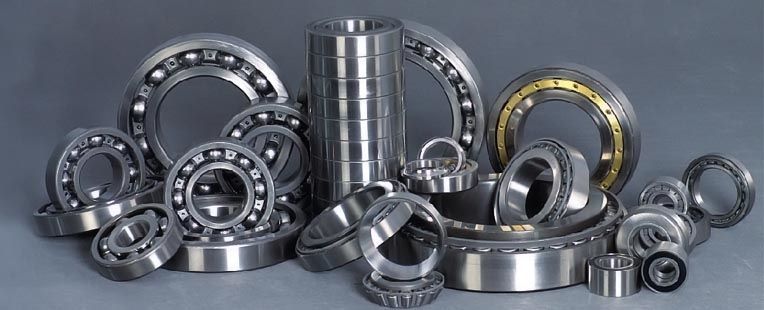
Bearings, as precision low parts on mechanical equipment, how to increase productivity in factories, first of all, the performance of mechanical equipment must be better, and one of the relations with the performance of mechanical equipment is greater-bearings. Therefore, during the production and processing of the factory, the bearings in the mechanical equipment must be well checked. For the sake of safety, Zhonghua Bearing Network shares the three major identification methods of bearing faults, and hopes to help everyone.
1. Identify by voice
Recognition by voice requires extensive experience. Must be fully trained to be able to identify bearing sounds and non-bearing sounds. To this end, this work should be carried out by dedicated personnel as much as possible. The sound of the bearing can be clearly heard by attaching a hearing aid or a sound stick to the casing.
2. Identification by working temperature
This method is a comparative identification method and is limited to applications where the operating state does not change much. For this, continuous temperature recording must be performed. When a fault occurs, not only will the temperature rise, but irregular changes will also occur. This method is suitable for use with the voice recognition method.
Keywords:
Previous page
Next page
Related news
Bearings, as precision low parts on mechanical equipment, how to increase productivity in factories, first of all, the performance of mechanical equipment must be better, and one of the relations with the performance of mechanical equipment is greater-bearings. Therefore, during the production and processing of the factory, the bearings in the mechanical equipment must be well checked. For the sake of safety, Zhonghua Bearing Network shares the three major identification methods of bearing faults, and hopes to help everyone.
The role and use of tapered roller bearings
Tapered roller bearings mainly bear radial and axial combined loads. Bearing load capacity depends on the raceway angle of the outer ring, the greater the angle, the greater the load capacity. This type of bearing is a separate bearing.
Before operating the equipment independently, employees should participate in equipment safety operation procedures, maintenance knowledge training, and obtain the operation certificate before they can operate on the machine.
Contact us
Tel: 0086 22 68638068
Fax: 0086 22 68638068
Email: goldenfix@126.com
Skype: helei850608
Mobile: +86 18802206000 | +86 18822022020
Our Location
Yuanmengkou Industrial Park,Yanzhuang Town,Jinghai District,Tianjin
Leave a message online
If you are interested in our products, please contact us

Messages